
The Secret to a 50-Year Driveway: Oil-Based Sealing and Strategic Resurfacing in Michigan
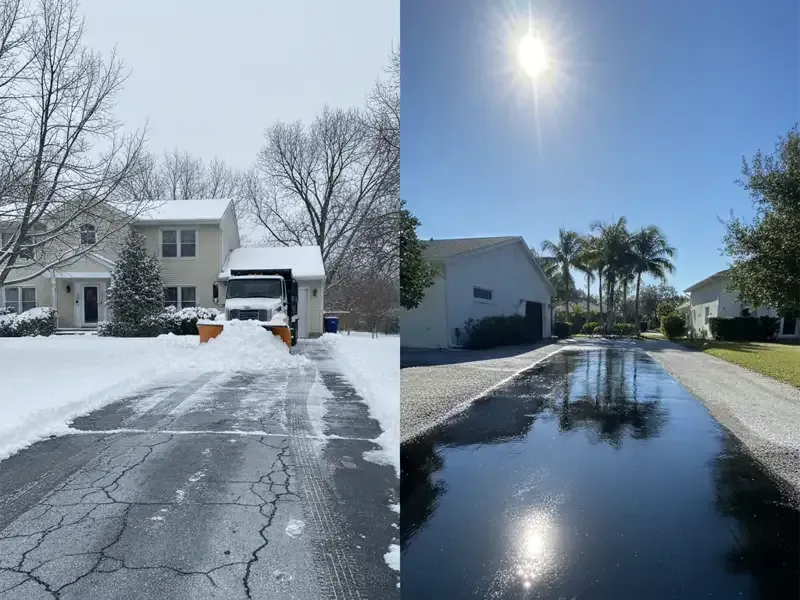
For homeowners and business owners in Canton, Farmington Hills, and the surrounding Michigan communities, an asphalt driveway is more than just a place to park your car, it is a significant investment in your property’s value and curb appeal. However, living in Michigan means dealing with freeze-thaw cycles, snowplows, and humid summers, all of which wage war on your pavement.
At DJs Paving, we believe in doing the job right the first time and maintaining it for a lifetime. We often hear from customers asking how to stop their driveway from cracking or losing stones. The answer lies in understanding the chemistry of your asphalt and choosing the right maintenance schedule.
Whether you are looking to protect a brand-new installation or breathe life into an older surface, this guide explores why we recommend specific sealers, how to stop deterioration in its tracks, and why the 20-year mark is the golden hour for your driveway.
The First Line of Defense: Why We Recommend Oil-Based Sealers
When you install a new asphalt driveway, it looks pristine—dark, smooth, and solid. But from the moment it is laid, the oxidation process begins. The sun dries out the liquid asphalt (the binder) that holds the stones together. Once that binder becomes brittle, the surface turns gray, and cracks begin to form.
To prevent this, sealing is non-negotiable. However, not all sealers are created equal. Based on our years of experience paving in Canton and Farmington Hills, we strongly recommend using an oil-based sealer, particularly for newer asphalt.
The "Penetration" Factor
The primary reason we advocate for oil-based sealing is its ability to penetrate the surface. Unlike some coatings that merely sit on top of the driveway like a layer of paint, oil-based sealers soak into the asphalt. This replenishes the oils that the sun and weather have leeched out. By restoring these oils, we keep the asphalt flexible. In Michigan, flexibility is key; if your driveway cannot expand and contract with the changing temperatures, it will snap and crack.
Stopping the "Pop-Outs"
One of the most common complaints we receive regarding aging driveways is the phenomenon of stones coming loose from the surface. In the industry, we call this "raveling."
When the binder dries out, it loses its grip on the aggregate (stones). You might notice loose gravel near the bottom of your driveway or feel a rougher texture under your tires. An oil-based sealer acts as a rejuvenating agent that re-binds the stone to the pavement. It locks the aggregate in place, stopping the deterioration process before it ruins the structural integrity of the drive.
The "Gem" and Longevity
Beyond the structural benefits, oil-based sealers provide an aesthetic upgrade that we like to say adds "life and gem" to the property. It restores that deep, rich, black finish that contrasts beautifully with your lawn and landscaping. But this isn't just about looks, it’s about longevity.
A rigorous schedule of oil-based sealing can add years, even decades, to the life of the pavement by acting as a barrier against water, gas, and oil spills.
The Latex Debate: When to Use It and When to Avoid It
While we champion oil-based solutions for their rejuvenating properties, there is a place in the industry for latex (or acrylic) sealers, though it requires a nuanced approach.
Latex sealers are often marketed as being more durable and having a darker, longer-lasting color. It is true that latex creates a hard, protective shell over the driveway. However, this "shell" characteristic can be a double-edged sword.
The Compatibility Issue
If your driveway has been sealed with latex in the past, you generally must stick with latex. You cannot easily switch back to oil-based because the oil cannot penetrate the hard latex shell remaining on the surface. If you attempt to put oil over latex, it will likely result in a messy, non-curing surface.
Conversely, if your driveway has been sealed with latex and the surface was not properly prepped, or if the asphalt underneath was already too brittle, the latex layer can flake and peel. We have seen many driveways sealed with inferior latex products that end up "all folded and cracked up." This happens because the sealer formed a film that trapped moisture or couldn't move with the asphalt during a freeze.
At DJs Paving, we assess the history of your driveway before making a recommendation. If you are starting fresh, we lean toward oil to keep the asphalt healthy. If you are maintaining a surface previously sealed with latex, we can provide high-quality latex options that won't flake, ensuring your investment is protected without causing compatibility issues.
The 20-Year Strategy: The Magic of the "Recap"
Even with the best maintenance and sealing schedule, asphalt has a lifespan. After two decades of Michigan winters, the surface layer will naturally show signs of wear. However, this does not mean you need to dig up the entire driveway and start from scratch.
This is where the concept of the Recap (or Resurfacing) comes into play.
What is a Recap?
A recap involves applying a new layer of asphalt over your existing driveway. Instead of removing the old pavement (which is labor-intensive and costly), we use the existing driveway as a base for a fresh top layer.
The Math of Longevity
It is generally good practice to consider putting a new surface on your driveway every 20 years. If the foundation (the sub-base) is still solid, but the surface is gray and rough, a recap is the perfect solution.
By capping the driveway at the 20-year mark, you can effectively gain another 30 years of life out of the driveway.
Think of it as a reset button. You get the look and performance of a brand-new installation for a fraction of the price of a total removal and replacement. This new layer seals off the old cracks, provides a smooth new riding surface, and resets the clock on oxidation. When you combine the initial 20 years with the 30 years gained from a recap, you are looking at a 50-year paving solution.
Why Local Expertise Matters
Asphalt paving is not a "one size fits all" trade. The mixture, the thickness, and the sealers used in Florida or Arizona will not work in Canton, MI.
The freeze-thaw cycle here is brutal. Water seeps into tiny cracks during the day, freezes at night, expands, and blows the crack wide open. This is why the advice we provided earlier, about using oil-based sealers to stop stones from popping out, is so critical. You need a sealer that prevents water penetration.
At DJs Paving, we understand the local soil conditions in Farmington Hills and Canton. We know how to grade a driveway so water runs off effectively, rather than pooling and freezing. Whether we are applying a sealer to protect against UV rays or laying down a recap to extend the driveway's life, we do it with the Michigan climate in mind.
Your Maintenance Roadmap
To summarize, here is the roadmap to a long-lasting driveway with DJs Paving:
- New Installation: Start with a high-quality install on a proper base.
- Regular Maintenance: Use an oil-based sealer to rejuvenate the binder, prevent stones from coming out, and keep the asphalt flexible. This adds the "gem" and curb appeal back to your home.
- Latex Considerations: Only use latex if the driveway has previously been treated with it. Be wary of switching types without professional consultation to avoid peeling and cracking.
- The 20-Year Recap: Don't let the driveway deteriorate to the point of failure. At the 20-year mark, recap the surface. This investment secures the structural integrity of the drive for another 30 years.
Trust DJs Paving with Your Home's Value
Your driveway is the welcome mat to your home. Don't let it deteriorate into a crumbling path of loose stone and gray asphalt. Whether you need a fresh coat of oil-based sealer to stop the stones from popping out, or you are ready for a 20-year recap to secure the next three decades of use, DJs Paving is here to help.
We are proud to serve Canton, Farmington Hills, and the surrounding areas with honest advice and superior craftsmanship.
Don't wait for the cracks to spread. Contact us today to evaluate your driveway and determine the best maintenance plan for your specific needs. Let's add life, longevity, and value to your property.
Recent Posts